A start date does not negotiate
Most sellers can wait out a bad month on the market. A relocation removes that option, and buyers can tell. A house that has to sell by a date negotiates from a weaker position than the same house with no deadline attached.
That is the real cost of the timeline, and it does not show up in any listing estimate. Selling to a cash buyer converts the deadline from a weakness into a term of the contract: you pick the closing date and it does not move.
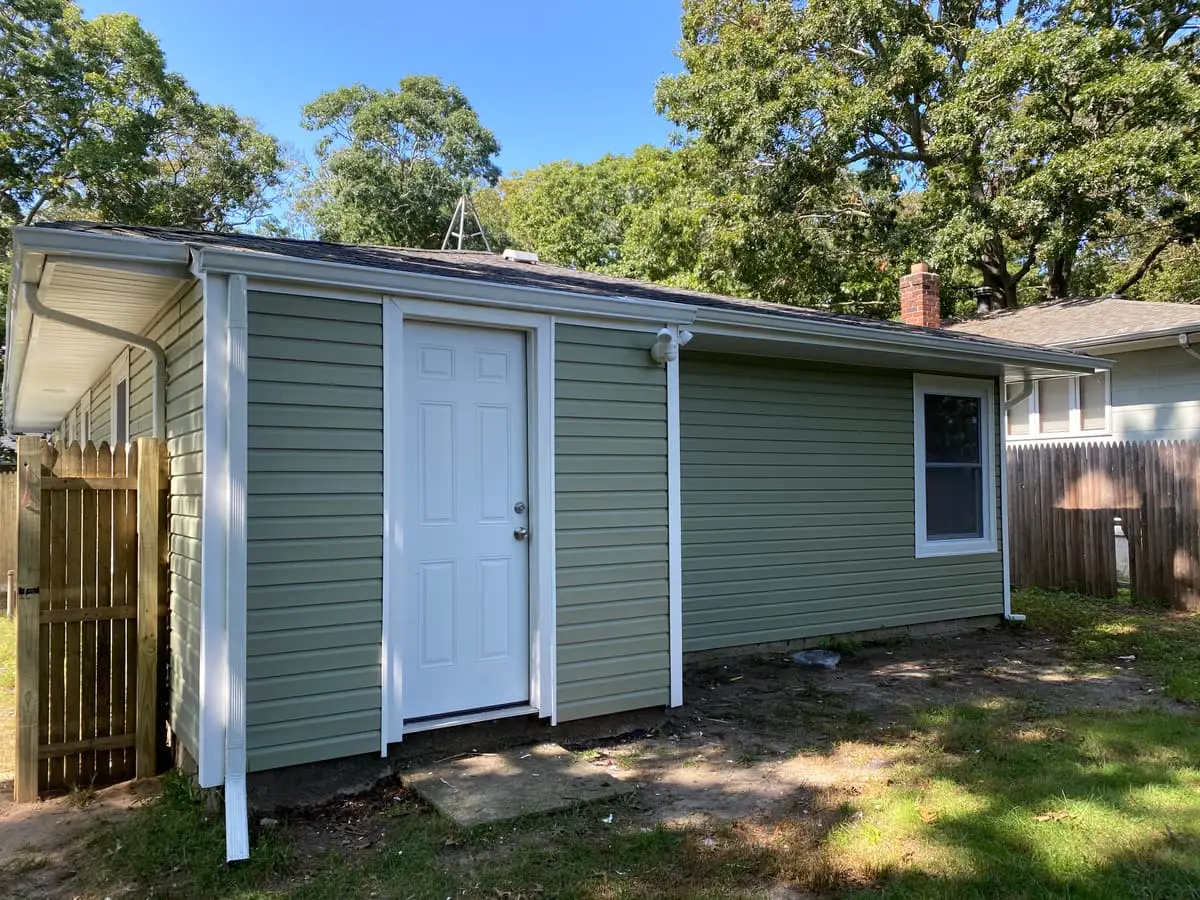
What carrying it from out of state costs after a relocation
A vacant house degrades faster than an occupied one, and an owner who relocated four states away finds out late. A small leak in January is a ceiling in March. A break-in on a street where people notice which homes are empty is a claim and a deductible.
None of that argues you must sell before you go. It argues you should know what the house is worth before the relocation, in writing, so the decision to hold it is a decision rather than a default.
What this looks like in Mastic specifically
Mastic is roughly 15,404 people in Suffolk County, ZIP 11950, and the housing stock is mostly ranch, cape cod, bungalow. Around Montauk Highway and Mastic Road, most of it is old enough that the mechanicals are on their second or third life. We have bought enough here to know which streets take water, which blocks still have oil tanks in the ground, and what the William Floyd Union Free School District does to a resale price.
Prices are up 16.5% year over year as of 2026-05, which sounds like unambiguous good news and mostly is. What it hides is that a rising median is driven by renovated stock. A house that needs work does not ride that wave - it gets compared to the finished one down the street and marked down against it. At a $540,000 median, Mastic is a market where buyers expect to do some work. That helps a seller with a dated house and hurts one with a genuinely broken one, because the pool that will take on a project is not the same pool that will take on a gut. The median house here goes under contract in about 27 days, which is quick for Long Island. It is also a figure that only applies to property in showable condition.
Closing on the Mastic house before the relocation date
One visit, a written number within 24 hours, and a closing date matched to your relocation. You do not clean the house, repair anything, or stage it for showings you will have relocated away from.
You also do not have to be here. Your attorney can handle a closing while you are already at the new job, which is common enough that it is not worth worrying about. Leave what you do not want to ship. The contents are ours after closing.
When you should list it instead
If the house is in showable condition, a bank will lend against it, and your relocation date is far enough out to absorb about 27 days plus a lender's underwriting, list it. Competition between financed buyers will beat what any single cash buyer pays, and the employer relocation package sometimes covers the carrying costs while it runs.
We will tell you when that is your relocation. It is a meaningful share of these calls, and saying so costs us a deal we should not have had.
How selling a house during a job relocation in Mastic works
- 1
Start with the basics
Where the house is (11950) and a rough sense of its condition is all we need to begin. Call or use the form. Nothing needs fixing or clearing out beforehand.
- 2
A quick look in person
We visit once and it rarely takes more than half an hour. On the ranch or cape cod houses that make up most of Mastic, we check the roof, the boiler and the electric before anything cosmetic.
- 3
A written offer within 24 hours
One figure, in writing, inside 24 hours. Not a range. Show it to a Suffolk County agent if you want a second view; if the house is already in good enough shape to list, an agent may get you more, and we will say so.
- 4
You choose when to close
Soon, or months away if probate, a tenant or your next move has to come first. You also avoid the 72 to 87 days a listed Mastic house typically takes to find a buyer and get through the buyer's mortgage.
Selling from a distance, step by step
If you have already relocated, the Mastic house is now a problem you handle by phone. The practical steps are shorter than people expect.
Somebody lets us in once, or we use a lockbox. You get a written number and a date. Your attorney handles the paperwork and the closing without you being there, which is routine. The one thing worth doing early is telling your insurer the house is empty, because a vacant house is covered differently and most owners who relocate find that out too late.
How we arrive at a number on a house during a job relocation
On a house during a job relocation, the number comes from three things: what it will be worth when the work is finished, what the work will cost, and a cushion in case we are wrong on either. That is all there is to it. There is no formula we are keeping from you.
- What it is worth repaired. Not the Mastic median of $540,000 on its own, but what houses like yours on your street actually closed at recently.
- What the work costs. Roof, boiler, electric, the kitchen and bath. In Mastic the stock is largely ranch and cape cod, and on houses that age the mechanicals are usually the expensive part rather than the cosmetics.
- How long we will hold it. The median Mastic house goes under contract in about 27 days once it is showable, then waits 45 to 60 days more on the buyer's lender. Ours has to get to showable first, and we carry taxes and insurance across the whole of it.
- What we are wrong about. Some of what a house needs only shows once the work starts. We price that in, and it is a big part of the gap between a cash offer and a retail sale.
Why this works for us when it would not for you
This is the part cash buyers tend to gloss over. We run millions of dollars of construction a year. That buys materials at contractor pricing and keeps our own crews working through the year, so the same renovation costs us roughly half what it would cost you to hire it out.
That is the business in one line. It is also why renovating before a sale rarely pays: you would buy the same roof and boiler at retail and hope to get it back at resale, which usually does not happen. We do not make our money by paying you less. We make it by building for less.
If the number does not work for you, tell us so. We would rather have that conversation than pressure anyone. We will look at where you are and give you an honest read on your options, including ones that do not involve selling to us. Plenty of sellers are better off with an agent, and we will say so if you are one of them.
The repairs you were going to do before you moved
Almost everybody relocating has a list: the bathroom they meant to redo, the roof they were going to deal with next spring, the basement that takes water. A relocation deadline turns that list into a problem, because hiring contractors for a house you are leaving, on a schedule you do not control, is expensive and stressful.
You do not have to do any of it. We buy Mastic houses as they stand, and the repairs are priced into the number once. If the list is short and cosmetic, listing may still win, and we will tell you so.
Common questions
Can you close before my relocation date?
That is the normal reason people in a relocation call us. Tell us the date you need and we will tell you plainly whether it is workable before you commit to anything.
Do I have to be in town for the closing once I have relocated?
No. Your attorney can handle it once you have moved, and doing it that way is common enough to be unremarkable. Ask your attorney how they prefer to manage it.
What do I do with everything the relocation is not shipping?
Leave it. Furniture, the contents of the garage, whatever did not make the truck. The cleanout is ours after closing and it does not change the number.
Should I rent the Mastic house out instead of selling before the relocation?
Sometimes that is the better answer, particularly if the mortgage is low and the house is in good shape. Be honest with yourself about managing a Mastic rental from another state, though, including the tenant who stops paying in your second year. We buy a lot of houses from long-distance landlords who started exactly this way.